
"KYS"
My cancellation

Author's Note and Disclaimer
This article is a personal, historical account of my experiences with Myalgic Encephalomyelitis (M.E./CFS) and related challenges. It reflects events from my past. I am not in any current danger, and the feelings described are no longer active in my life. This article is not medical advice, an endorsement of any treatment, or a call to action against individuals or groups. Views expressed are my own and based on comprehensive evidence to be published at a later date.
Trigger Warning / Content Advisory
This article contains detailed discussions of:
Suicide and suicidal ideation
Bullying, abuse, and threats (including online harassment)
Medical gaslighting and mistreatment
Chronic illness, isolation, and despair
These topics may be distressing or triggering. If you are vulnerable to these themes, consider skipping or reading with support. If you're in crisis, seek immediate help - resources are listed below.
“KYS”
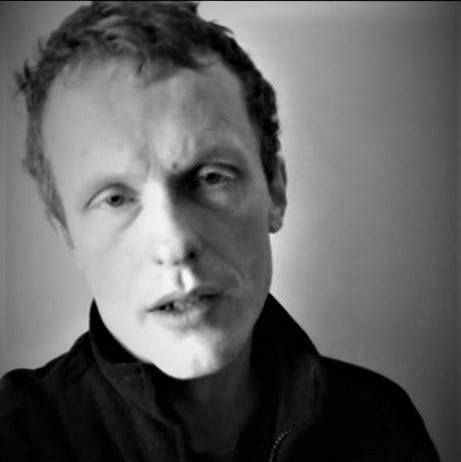
At age 51 Graham has given me the opportunity to look back over my life and repeated cancellations. He advises me to be calm and reflective and my wife tells me to “keep it light”. So; “Hello my name is James David Chapman. I am well-known for being an insane, lying, Nazi. You're advised immediately to block and to cancel me and I'm led to believe that I am a burden, an abuser, and a nutcase.”
To understand how I became a liar I'm afraid you'll need to know what Myalgic Encephalomyelitis, (M.E) is. My apologies; I’ll be brief: The primary symptom of M.E is illness following exertion. It's not unfitness, laziness, burnout, or depression, it’s a disability that increases the more you fight it. M.E is a terrible bind: you're damned if you exercise, and of course you're damned if you don't. Let me assure you: M.E is an absolute cunt. I should know, for it took me 35 years to give it the slip.
In my early teens I loved to walk around Rutland Water, but after a series of upper respiratory tract infections I found that I had permanent tonsillitis, muscle pain and Glandular Fever (Mononucleosis). My doctors however initially suggested that I was a liar and a skiver. It's never been clear what evidence there was to justify this diagnosis, but at that early age British medicine taught me that you become a liar not by lying but by people treating you as one.
The decades began to pass me by and the Open University’s schedule flitted across our television screen like the passage of the sun in Wells’ Time Machine. Even in my brain-addled state the OU eventually managed to teach me the fourth derivative of position with respect to time - by simple drill and repetition. One year however, deep in the night, a training video for doctors was broadcast unencoded and I found that people with M.E were being referred to as “heart-sink” patients because of how we made our doctors feel. The aim appeared not to be to cure us, but to cure our doctors of us. I realised in that moment that no-one was coming to save me. I was all alone in the dark.
My career in medicine was stillborn through illness, however I wanted to make sure that others did not feel alone as I had done. Over the early years of the internet I responded to hundreds and hundreds of people isolated by M.E. Meanwhile, doctors removed my welfare support, my food and shelter. And finally my character was blackened beyond repair when my own brother suddenly claimed never to have believed in the severity of my illness.
Medicine responded to M.E patients with open cruelty and later with an exercise treatment programme that many patients consider to be covert cruelty. The trouble was that because doctors rejected M.E symptoms, there was no way for patients to report symptom-worsening. This simple fact made medical treatment for M.E unsafe.
Exercise was eventually justified by PACE: a study that told its conclusions to patients during the trial, (of course it did, M.E patients are liars, we don’t deserve good science). Meanwhile patient suicides were suggesting there was a serious problem within M.E. "It’s a prison sentence, with torture" as one patient put it before leaving us. My doctor “literally has my blood on his hands” another wrote before the end.
My decades of experience told me people with M.E needed advocacy and this meant: awareness raising; support; and protective mediation in all dealings with medicine. I met with charity founders, challengers to PACE and with the then President of the Royal College of Psychiatrists. I wrote 50,000 tweets and eventually became known around the world for supporting M.E patients: if we were to be liars, at least we would be liars, together.
M.E advocacy began to morph into activism when U.S. academia got involved. Patients, kettled by their collective inability to report harm, were all too glad to be listened to. They welcomed researchers, journalists and professors as new leaders, but these individuals brought extremism with them. Studies were torn up and medical bias was replaced with an equally unhelpful counter-bias. Researchers were suddenly not just in the lab but out on the protest lines too. For some researchers seeking funding, conflict with psychiatry took priority over conflict of interest.
Eventually you could say a sort of coup occurred, where old style patient advocates were either radicalised into militant activists, sidelined, or cast out. It suited the new regime to present M.E as if it were progressive, degenerative, and utterly hopeless. This made for a more urgent and compelling case for funding but it left a generation of patients with a skewed and dangerously bleak view of their future.
Patients, doctors and even celebrities who reported recovery were publicly trashed and hounded out of the community. Researchers opposed to patient dogma were monstered and silenced. M.E activism became a monoculture that spread like bamboo to Long Covid and FND. Militant activism brought with it intimidation of patients combined with a perverse public denial of wrong-doing. Some doctors left the field due to the abuse problem, others faced it head on and still suffer patients’ long-term hate.
I don't like to see women, children or sick people bullied. When yet another female patient was attacked, I stepped up to challenge their attacker: a senior academic-activist, a community leader. He had no way to justify his behaviour other than to send threats and abuse my way too. The M.E community paused, then followed his lead. I reported intimidation to charities and community leaders, but I found myself repeatedly blocked and ignored. Colleagues withdrew their support and friends ghosted me. The social support lifeline I’d held out for others, was withdrawn from me. Endless character abuse eventually ended up as threats to track and destroy my career for the rest of my life. Huh. Career? I was a patient. I had no career.
Academic-activists went on to create the perfect lie: Abuse in M.E activism was just a rumour spread by medicine. This served both to deny and to confuse the problem, and further to vilify and dehumanize researchers who were out of favour with the mob.
While my position as a well-known and respected advocate was being torn down, senior M.E community members came and privately shared their true feelings. In public the abuse problem was acknowledged, but only rarely. I became a confessional for those attempting to absolve their consciences. You haven’t lived until you’ve had the founder of a national M.E charity explain to you why a journalist from UC Berkeley is going to leave you to be bullied long term. It’s da bomb! Eventually I was treated as a bully and then a Nazi. I had to be, otherwise the activists involved would know themselves to be monsters.
Militant activists successfully lobbied NICE to review and to radically change the UK national M.E/CFS treatment guidelines. This was completed even though a member of their committee was fully aware that an academic-activist was silencing patient voices. In the end I decided that any association with activism was toxic and so I deleted my account and following. Instead I created a video each day, advising people with M.E not to be abusive to doctors or other patients, but after 2,000 videos I accepted the message would not take root. The M.E community had made its choice.
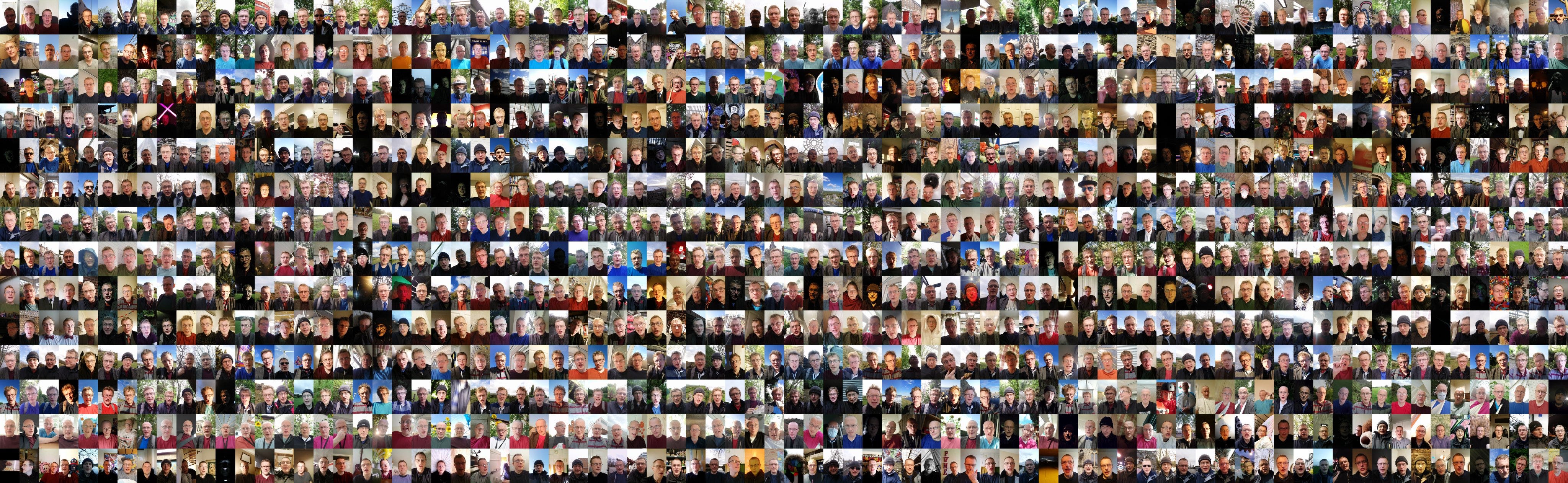
Do we do trigger warnings? Because it’s going to get a lot worse before it gets better!!
The community I’d spent much of my life supporting now left me to suffer. I was thrown back into severe illness, socially isolated, and my character and reputation were being regularly and comprehensively trashed: I was a lying Nazi. Militant activism continued hellbent with senior figures now promoting brain and spinal surgery to patients. What is it with extremists and unproven surgery?!
People say you should be able to take online abuse. This is because much of the abuse on Twitter/X is of a low grade. Abuse, however, can also manifest as a deeply damaging dark art and its targets can find themselves endlessly tortured like voodoo-dolls. All those years being treated as a liar created the idea within me that I was a burden to those I loved. And now at this point, being treated as a Nazi by so many, for so long, generated the idea of killing myself.
I tried again and again to report threats and abuse to M.E charities, activists, and researchers and to the wider patient community. Of course I found couldn’t report threats from activists to the Guardian. It all became too much for me and I collapsed and in so doing injured myself. My one-man attempt to change my community’s behaviour was a complete failure.
And then on one day the thought to end myself arrived unbidden: over and over and over again it came. It was presented to me as the only way to make the intolerable pain stop. If it were up to activists and physicians then this is where my story would have ended, by my own hand, but not quite by my own volition, if you understand me.
Thankfully, however, back in 2016 when I first stood against community bullying I’d also put in motion a completely different plan. Here, instead of activism, I attempted to challenge and change myself, and this is a fundamentally healthy thing to do. Despite activists’ choke-hold I achieved a sum total of 1.1 million views while writing the first version of a new treatment for M.E. I apologised in public to medicine for my bias as an advocate. I tried to find balance and moderation and I looked again at ideas presented across the board. I wondered if both doctors and patients could in some sense be correct? What if zealotry itself was locking M.E patients and their physicians into illness by forcing them to respond to M.E with rest or with exertion but never both?
And this is where my life took a truly unexpected turn and I cured my M.E. I know, right? I treated the disease Myalgic Encephalomyelitis as a problem of timing. Like an engine with a misaligned timing belt, the car is fine, but it fights itself. A little while later I worked out a way to repair this fault and after 35 years of chronic mistreated illness, I was well.
With evidence of community leaders’ misconduct and my seditious talk of recovery, senior M.E activists lost their minds. They needed a new strategy, they needed to discredit me completely, so they treated me as if I were insane. As I tried to report evidence and my personal experience, I found senior activists branding me mad in public and warning off contacts in private. Two UK national charities would not even run formal complaints. My status as an outlier and Nazi was of course “proof” that I was sick and crazy.
Cancellations seem so personal, but really they’re not: I'm a liar because otherwise medicine mistreated a 12 year old boy. I'm a Nazi because otherwise I’m whistleblower of academic-activism, and I'm insane because otherwise I'm a patient who really did work out how to get better.
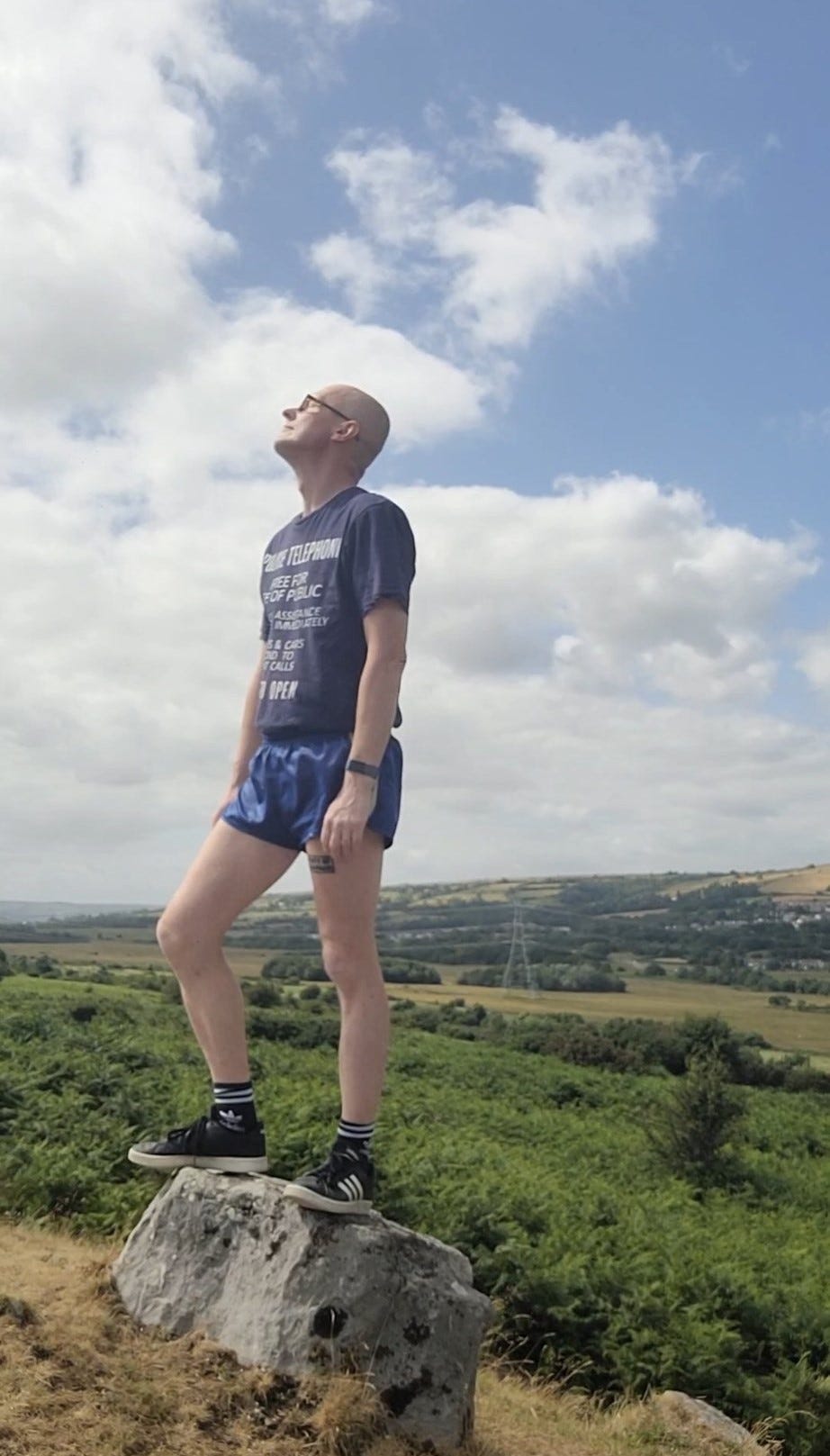
It’s not very nice being treated as a lying, Nazi, lunatic, but after three and a half decades ill, when I'm running straight up the mountains of South Wales, do you think I feel anything other than joy?
@batteredoldbook
Support Resources
Samaritans (UK): Free, 24/7 confidential support. Call 116 123 or email jo@samaritans.org. Website: samaritans.org
National Suicide Prevention Helpline UK: Open 7pm–midnight daily. Call 0800 587 0800. Website: spuk.org.uk
NHS Urgent Mental Health Support: For immediate help, visit nhs.uk/mental-health or call 111 (option 2) for 24/7 advice.
Mind (UK): Information on helplines including CALM (for men) and Shout (text-based). Website: mind.org.uk
If you're outside the UK, search for local equivalents via organizations like the International Association for Suicide Prevention (iasp.info).